
the movement
honor ancestors, serve descendants, nourish all
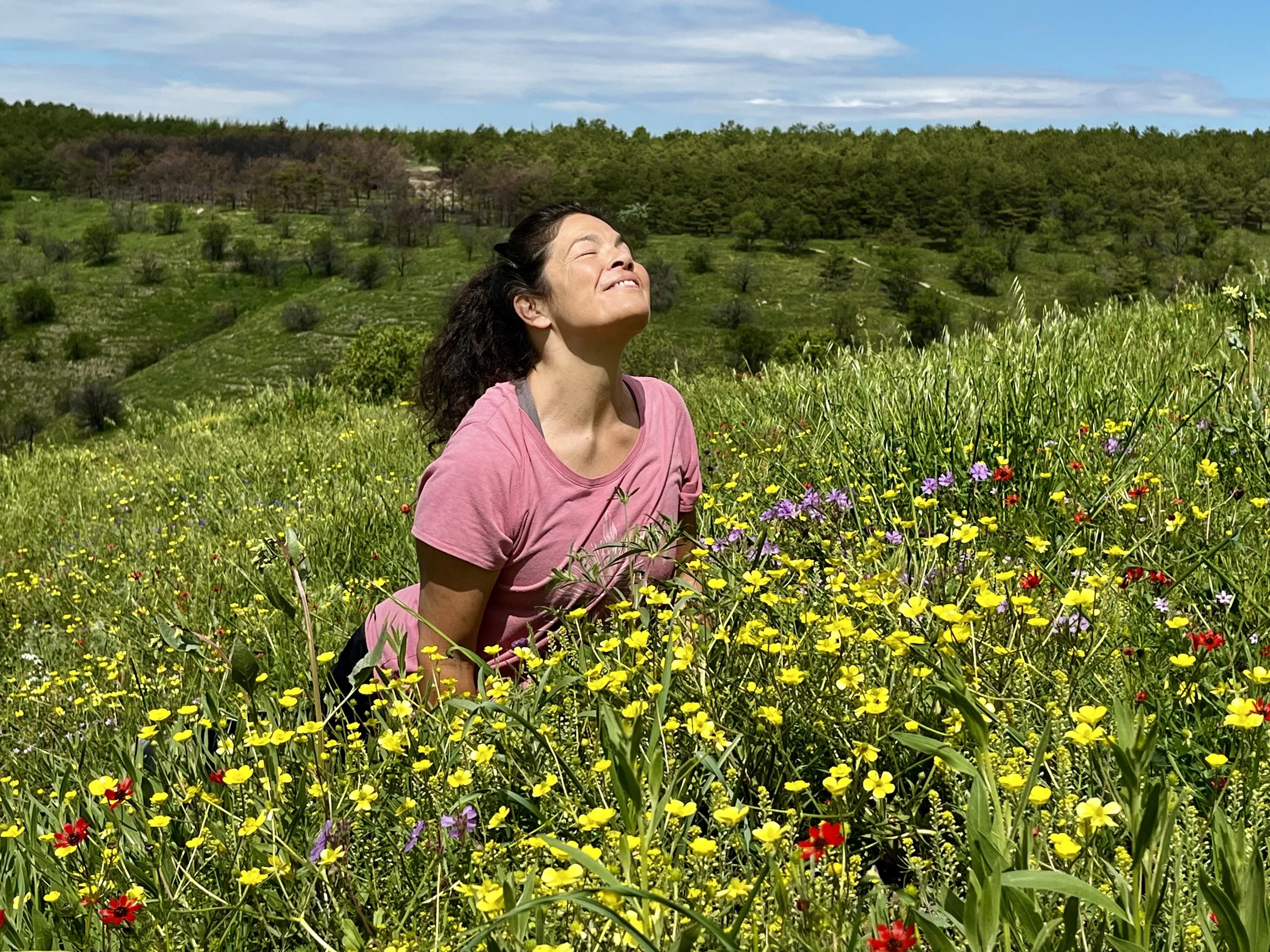
Image: Following the wild flowers and lifting my heart to the sun.
Congratulations you are Interdependent!
Yoga practices ask you to turn your awareness inward. From the outside this can sound like a self-serving action. Ultimately the practice reveals the path of service to others.
Three of the most common reasons reported for trying a yoga class include:
My low back hurts
My neck and shoulders feel tight and stiff
My doctor told me to reduce stress and increase flexibility.
The roots of yoga teach us that no matter the reason you come to the practice you can start wherever you are. Therefore, even if the reason that sends you to a yoga class is about addressing a personal discomfort, your commitment to the practice will benefit others. Yoga asana practice (physical postures and movement patterns) carries great potential to address bodily ailments especially if they are done in the context of the wholeness of yoga
What is the Wholeness of Yoga?
Patanjali Yoga Sutras (a foundational ancient text) explains yoga as ‘eight-limbed’ practice:
yamas: ethical standards of how we treat others
niyamas: how we culture ourselves
asana: physical practice
pranayama: often referred to as ‘breathwork’ (breath is one aspect of prana)
pratyahara: sensory withdrawal
dharana: focused awareness
dhyana: defocused awareness
samadhi: state of bliss/liberation
How Does Yoga Transform Us?
Yoga was formulated thousands of years ago, yet the practices speak to our modern-day experience. Current dominant culture pushes pace, foments fear, and spreads scarcity mindset. That translates into our psychology as a state of reactive, negative thought patterns. Yoga practices invite you to shift toward an ‘observer’ mindset. The wholeness of yoga invites humans to shift away from a worldview of limitation and punishment to one of opportunity and possibility.
As my body moves toward a new decade, I am experiencing the changes that come with the glory of aging. For example, I sense overall stiffness in the mornings upon waking. I lean on years of yoga to stay in ‘observer mode’ and notice any thoughts and feelings I have associated with the sensation of stiffness without judging them. When witnessing any negative self-talk about my age or my body rise in my mind, I can choose to hold on to that notion or choose to observe it surface and let it go. Rather than get caught up in judgement-blame-shame thoughts, I am free to direct energies towards tending to my body with gentle movement and drinking warm water. Hydration and motion are simple and effective physiological countermeasures to stiffness. The practice to detach from reaction and move toward response is a psychological remedy we need to repeatedly apply.
It’s easy to write this; it takes time and practice to do it. Yoga even advises us to be patient with ourselves as we learn to navigate away from overwhelm and toward the sweet simplicity of one small step at a time.
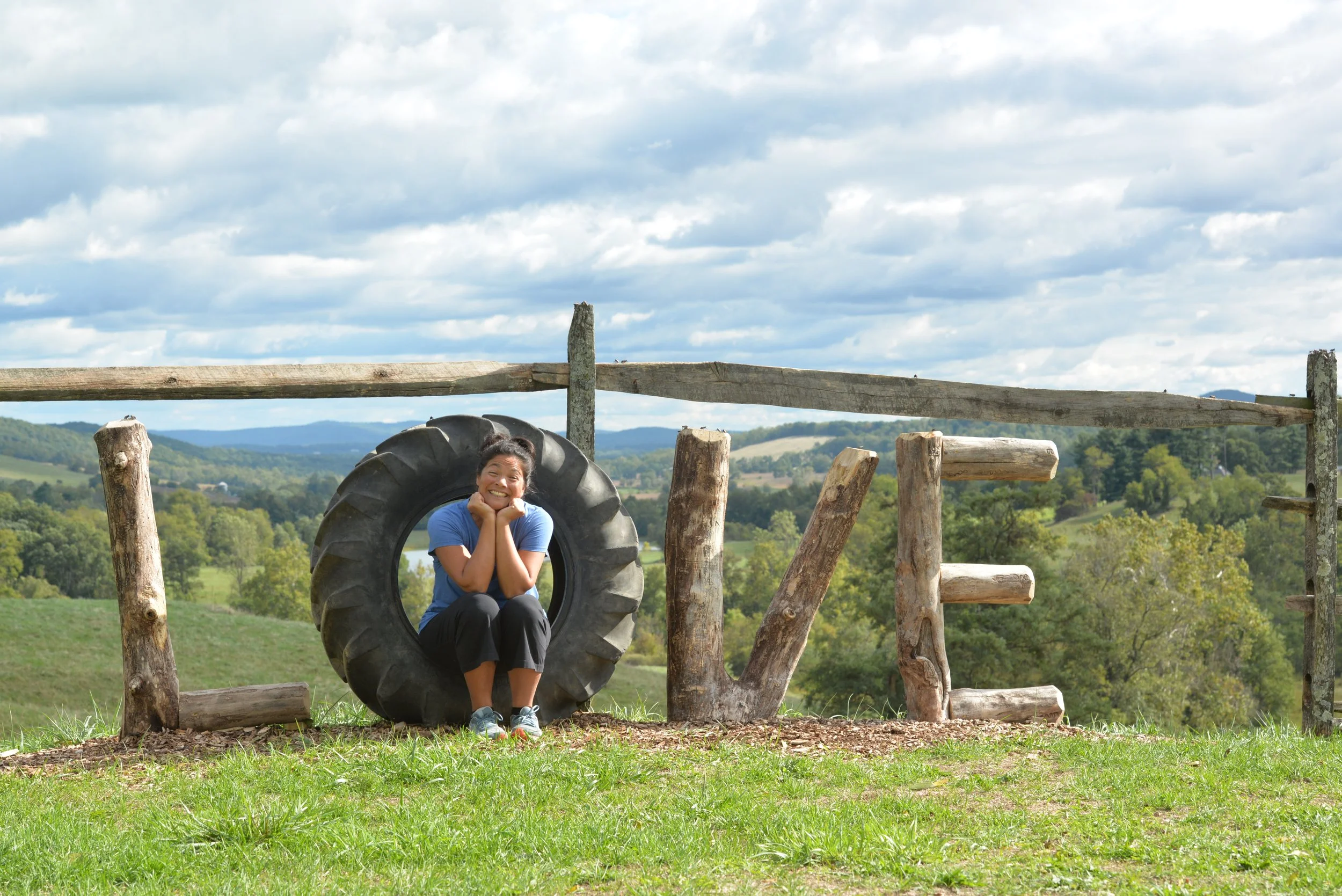
Image: I’m sitting in the ‘o’ of a sculpture of ‘love’ in Northern Virginia, mid summer of 2024
Interdependence with All Life.
The longer I get to live, the yogic teachings become ever clearer. The ancient Sanskrit poem the Bhagavad Gita teaches that interdependence is the nature of existence. Our expansive universe is an endless web of symbiosis. We are in relationship with ourselves, each other, and all of life. Our wellbeing depends on the wellbeing of each other and the world around us and vice versa.
Both the Bhagavad Gita and Patanjali Yoga Sutras are part of the broader Vedic tradition, practices, and philosophies passed from one generation to the next for millennia. The poetry of the Gita invites us to experience the broader heart-centered context of yoga in daily living. The Yoga Sutras offer us a structured framework to follow.
In the Sutras the yamas come first. They teach us how to be in the world with others. How to serve others. The first of the yamas is ahimsa (non-violence). Embodiment of ahimsa is the only way we can be a conduit for ahimsa to the world around us.
The invitation is to celebrate your interdependence with all life. Practice ahimsa with yourself so you truly know it in the core of your being. Let the core of ahimsa radiate from you across the interconnected web of life.
I welcome you to explore the heart-centered collections in our OnDemand Library. As we integrate the body-breath-mind-wisdom-spirit nourishing of our energetic heart-center, we cultivate our capacity to embody ahimsa.
July 2026
My ancient text teachers would point out that the order of any list given in the sacred spiritual teachings carries significance. Of note, the yamas come first.
The yamas are five moral guidelines we follow in our interactions with others and the world around us to foster integrity and harmony. The five yamas:
ahimsa: non-violence
satya: truthfulness
asteya: non-stealing
brahmacharya: moderation
aparigraha: non-attachment
Another list, and again, the ordering matters. The first yama is ahimsa, non-violence. I know you can flesh out the timeless reasons that humanity needs to abide by non-violence in accordance with each other and our shared planet. What I wish to explore with you is the effect this yama can have on our wellbeing if we apply it to our own psychology and physiology.
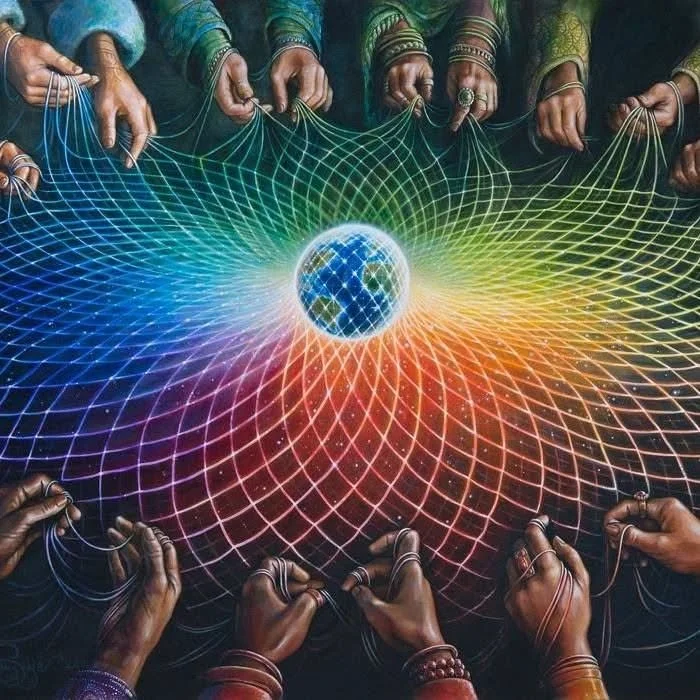
Image: Light Work by Autumn Skye Morrison
http://www.autumnskyemorrison.com/
Do You Abide by Non-Violence When it Comes to You?
Attachment to negative thoughts perpetrates violence to our own being. When your mind is holding on to a negative thought, physiologically you go into a stress response often referred to as ‘fight or flight.’ This triggers a cascading electro-chemical reaction which can cause damage to your tissues over time. Yoga asks us to look at the root cause of the ‘fight or flight.’ It is the negative thought on repeat in your mind. Take a step back and you will likely see the negative thought is interrelated with a specific perspective/perception. Working to change your perspective can foster a seed bed for positive thoughts and response, rather than negative thoughts and reaction.
A specific example will help with this understanding. I will turn 50 this summer. Dominant culture would like me to hold the perspective that 50 is ‘over the hill.’ That growing any older than 29 is ‘too old!’ That the changes that naturally come with growth and age need to be hidden or disguised. I just can’t.
I refuse the propaganda. Growing, maturing, living long enough to learn life lessons and pass them on is a gift. I lost loved ones who did not get to live past age 29, or 49 or whatever age is deemed ‘too old.’ My own dad died at age 64. If he were alive today, he’d be celebrating his 92nd birthday. He would not have cared that he had grey hair or that his deep smile lines were permanent wrinkles. He would have relished being present in his grandchildren’s lives and taken great joy in teasing his daughters for our middle age foibles and fumbles. What if, rather than indoctrination that aging is shameful, we imbue ourselves with a positive perspective on the aging process? The former causes constriction, the latter opens us to explore tools and teachings to embrace the course of nature. All humans have within us what it takes to allow grace and space for the privilege to breathe and be embodied for every decade we get to walk this earth.
Yoga blends physical, mental, and energetic practices. With sincere and consistent practice, we can transform our perspectives. We can reshape our default mindset to non-violence. When we transform within, the way we perceive and interact with the world around us is likewise transformed.
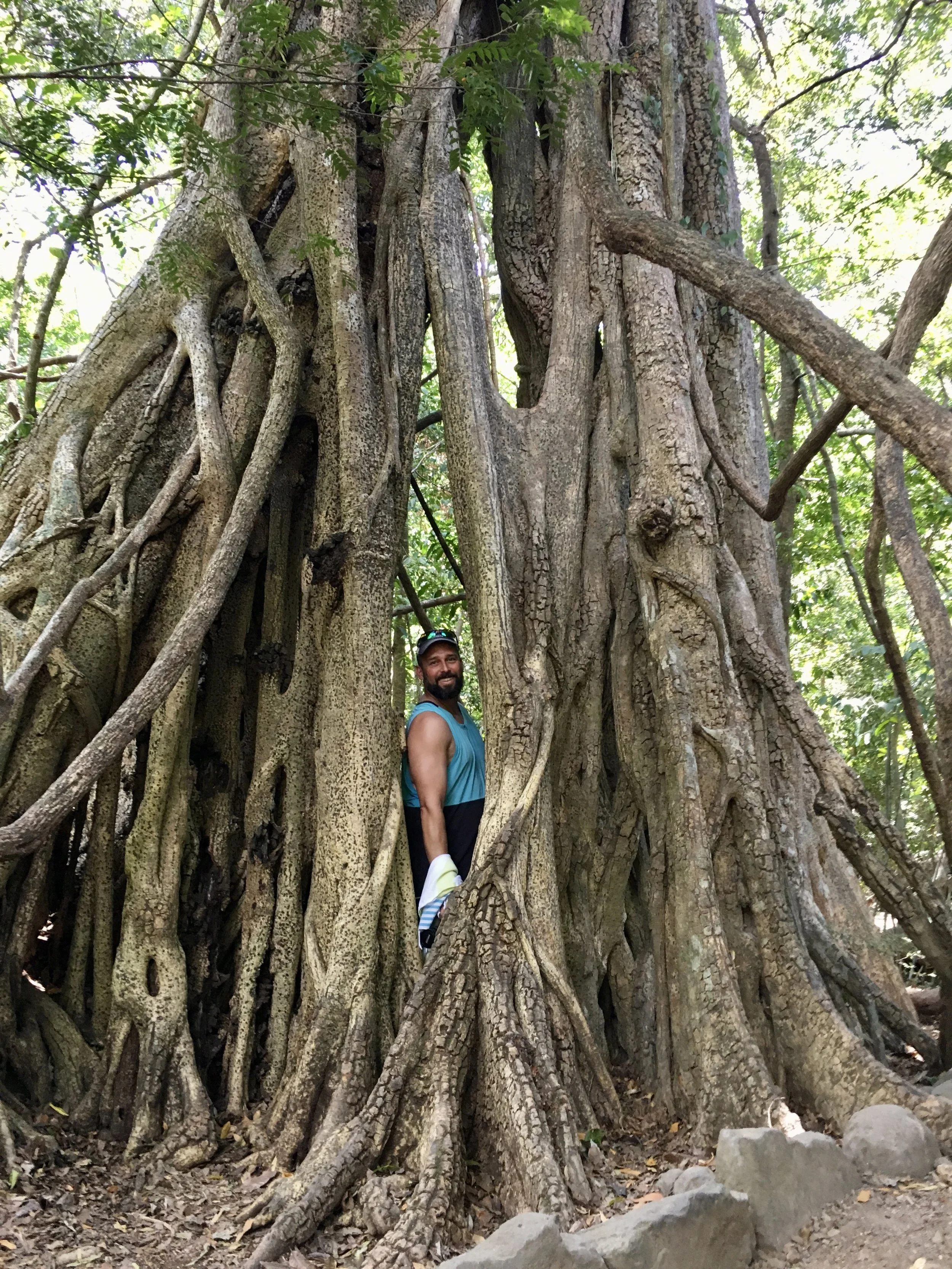
Image: Kyle inter-relating with trees on a hike in the Rinconde la Vieja national park in Costa Rica, 2019.